Almost every electrification project stalls on the same question: can this site actually take the new load? The capital is approved, the chargers are on order — and then someone has to answer whether the panel can handle them. The answer usually comes back as a shrug, a nameplate estimate, or a year-old utility bill. None of those is the same as knowing.
There’s a better path, and it’s written into the code itself. It’s called NEC 220.87, and it lets you size new load against what your building actually draws — not against a worst-case sum of everything that could theoretically turn on at once.
What NEC 220.87 actually is
NEC 220.87, “Determining Existing Loads,” is the section of the National Electrical Code that lets you calculate spare capacity from measured maximum demand instead of a connected-load tally. The rule, in plain English:
Take the building’s actual maximum demand, multiply it by 125%, add the new load you want to install — and if the total stays within the ampacity of the feeder or the rating of the service, you’re clear.
That 125% is the safety margin baked into the code. Everything hinges on that one input: the measured maximum demand. Get it right and the rest is arithmetic.
Why it beats a nameplate estimate
The traditional way to calculate a load adds up the nameplate ratings of everything connected and applies standard demand factors. It’s conservative by design — and on an existing building it’s usually wrong in the expensive direction. A panel rated for 800 A might never cross 480 A at its busiest fifteen minutes of the year, but the nameplate math can still say “no room.”
220.87 lets you use reality instead of the worst case. If the service is running well under its rating at peak, that measured headroom is real, defensible capacity you can put chargers or equipment into — often without touching the service at all.
When you’re allowed to use it
The code is specific about the data behind the number:
- A full year of demand data. If your utility or meter already records maximum demand — the highest average kW sustained over a 15-minute interval — and you have a year of it, you can use that directly.
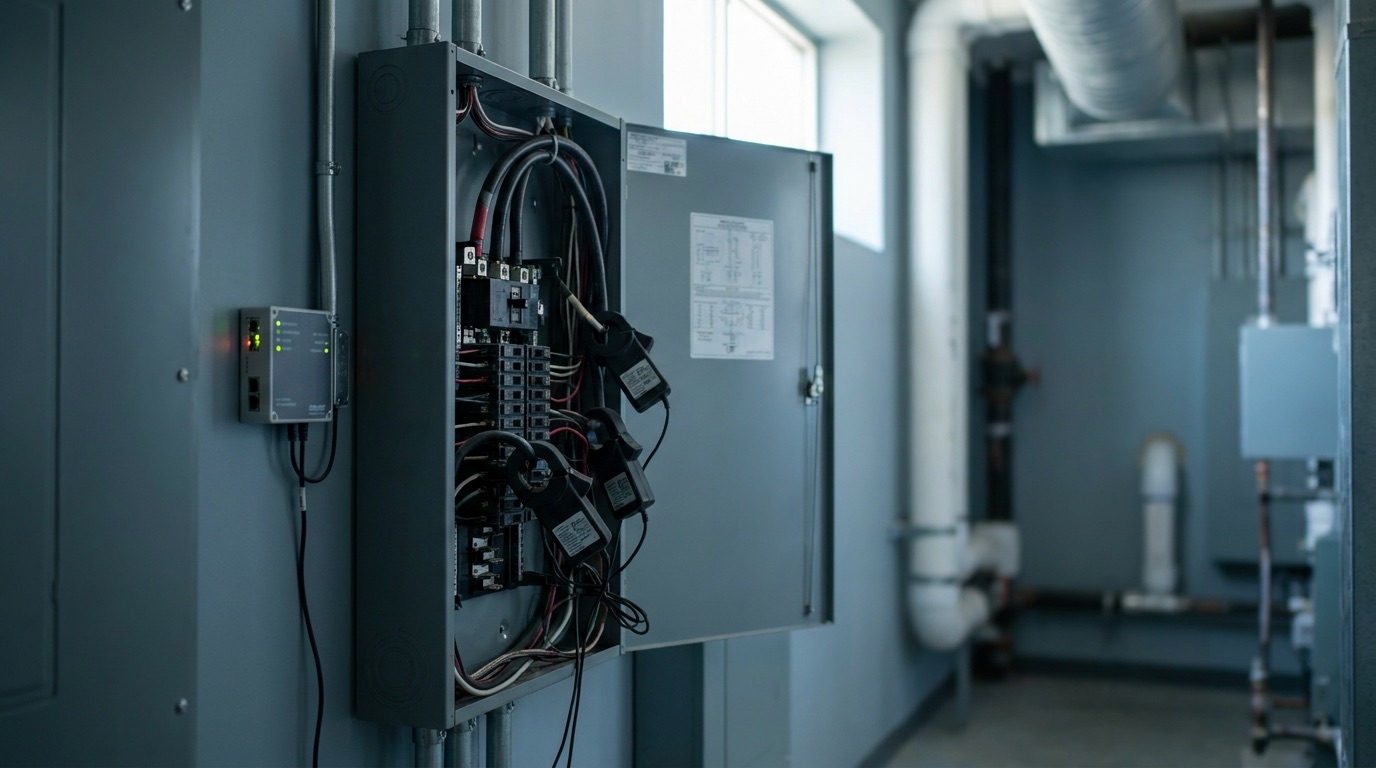
- Or a 30-day recording. If you don’t have a year, the code permits a minimum of 30 days of continuously recorded demand from a meter on the highest-loaded phase. This is the “30-day load study” you’ll hear referenced — it has to be taken while the site is occupied and operating, and it has to capture the larger of the heating or cooling season.
The catch: a brand-new building with no operating history has nothing to measure, so 220.87 doesn’t apply yet. And EV charging is a continuous load — that same 125% factor applies to the chargers you’re adding, not just the existing demand.
Where the number goes wrong
The calculation is simple. The input is where projects get burned:
- A bill is not an interval reading. The “peak demand” line on a utility statement is a monthly figure that may be averaged or estimated differently than the 15-minute interval maximum the code wants. Close isn’t the same as measured.
- Seasonality hides the real peak. A study run in October can miss the August cooling peak entirely — and the code explicitly wants the worst season in the window.
- Coincidence matters. New chargers don’t draw in a vacuum; they stack on top of the existing peak. Whether they coincide with it changes the answer.
How a capacity check gets you the answer
This is the whole reason Ampscale exists. It turns the bills, utility data, and panel photos you already have into a conservative headroom range and the 220.87 load basis behind it — so the input isn’t a number you hope is right, it’s evidence you can hand to the utility, the AHJ, your contractor, and finance. Where the data needs tightening, it shows whether a short metering study or field verification is worth it, and packages everything into a permit-ready Headroom Passport.
You don’t have to start with perfect data. Send a recent utility bill or a panel photo and we’ll give you a free capacity check — a conservative headroom range, a confidence grade, the missing evidence, and a permit-ready approval path. Want to ballpark it yourself first? The free headroom calculator runs the same 125% logic on numbers you already have.
This is general information, not engineering or legal advice. The NEC is adopted and amended locally, and your Authority Having Jurisdiction has the final say on what’s acceptable for your site. Figures and examples here are illustrative.